Hip arthroscopy
As the only hip arthroscopy expert in the region, we help you find relief from pain and get back to your life — without the need for a full hip replacement.
740-779-4598Why choose Adena Health?
When your hip isn't working as it should, it can feel like your whole life is put on hold. As the only provider of hip arthroscopy in the region, Adena Orthopedic and Spine Institute offers a minimally invasive treatment to help you get back to your life.
Our team of experts covers a wide range of conditions for bones, muscles, joints, and tendons incorporating the most advanced surgical and non-surgical treatment options. In addition to patient-led treatment options, take advantage of on-site diagnostics, convenient locations, and a dedicated patient navigator — helping you every step of the way.
–David Pettit, MD, Surgeon, Adena Orthopedic and Spine Institute
What is hip arthroscopy?
Hip arthroscopy is a minimally invasive procedure that allows orthopedic surgeons to diagnose and treat problems inside the hip joint without making large incisions. Using a specialized camera called an arthroscope, the surgeon can clearly view the joint and make precise repairs through small incisions in the skin. This approach often leads to quicker recovery, smaller scars, and less postoperative discomfort than the traditional open approach.
At Adena Orthopedic and Spine Institute, our orthopedic specialists use advanced arthroscopic techniques to relieve hip pain, improve function, and help patients return to normal activities sooner.
Orthopedic and spine excellence
Discover why patients choose Adena →
Who may need hip arthroscopy?
Hip arthroscopy is typically recommended for individuals who continue to experience hip pain in the groin even after trying rest, medications, and physical therapy. Your doctor can use an imaging test to diagnose the issue and recommend this procedure.
Arthroscopy can often delay or even prevent the need for a hip replacement by correcting these problems before they worsen.
Signs to see your doctor:
- Persistent hip pain
- Deep groin pain
- Pain that worsens with activity including walking, running, sitting, squatting, pivoting, or twisting
- Pain during or after sports where rotation is involved such as dance, soccer, or hockey
- Frequent feeling of the hip clicking, catching, locking, or snapping
- Limited range of motion impacting daily life
Conditions that typically require arthroscopic treatment:
- Labral tears – Damage to the cartilage rim that lines the hip socket.
- Femoroacetabular impingement (FAI) – An abnormal shape in the hip bones that causes friction between the thighbone and the hip socket.
- Cartilage injuries or loose fragments – Pieces of bone or cartilage that cause pain or locking in the joint.
- Mild hip dysplasia – A shallow hip socket that causes instability.
Benefits of hip arthroscopy
Hip arthroscopy offers many advantages when compared to traditional open surgery:
What to expect during your procedure
This procedure usually takes about 120 minutes. You’ll receive both regional anesthesia to numb the area where the incisions are made and general anesthesia to keep you asleep throughout the surgery.
During the hip arthroscopy, the surgeon makes several small incisions near the hip and inserts the arthroscope to view the joint. Through additional small incisions, specialized instruments are used to repair or remove damaged tissue, reshape the bone, and repair the hip capsule.
Once the repair is complete, the small incisions are closed with sutures, and you’ll move to a recovery area before heading home.
Recovery and rehabilitation
Most patients recover from hip arthroscopy within four a half to six months, though the exact timeline varies. You’ll likely use crutches for about two weeks to protect the hip and wear a brace for added support for several weeks. Swelling and discomfort are common at first but improve with medication, rest, and ice.
Physical therapy begins within a few days of surgery and plays a key role in recovery. Early sessions focus on gentle range-of-motion exercises, followed by progressive strength and stability training.
Typical milestones include:
- Wean from crutches: Within two to three weeks
- Return to work (desk job) or school: Around one to two weeks
- Low-impact exercise: After eight to 12 weeks
- Full return to sports or heavy activity: Within six months
Frequently asked questions
Location
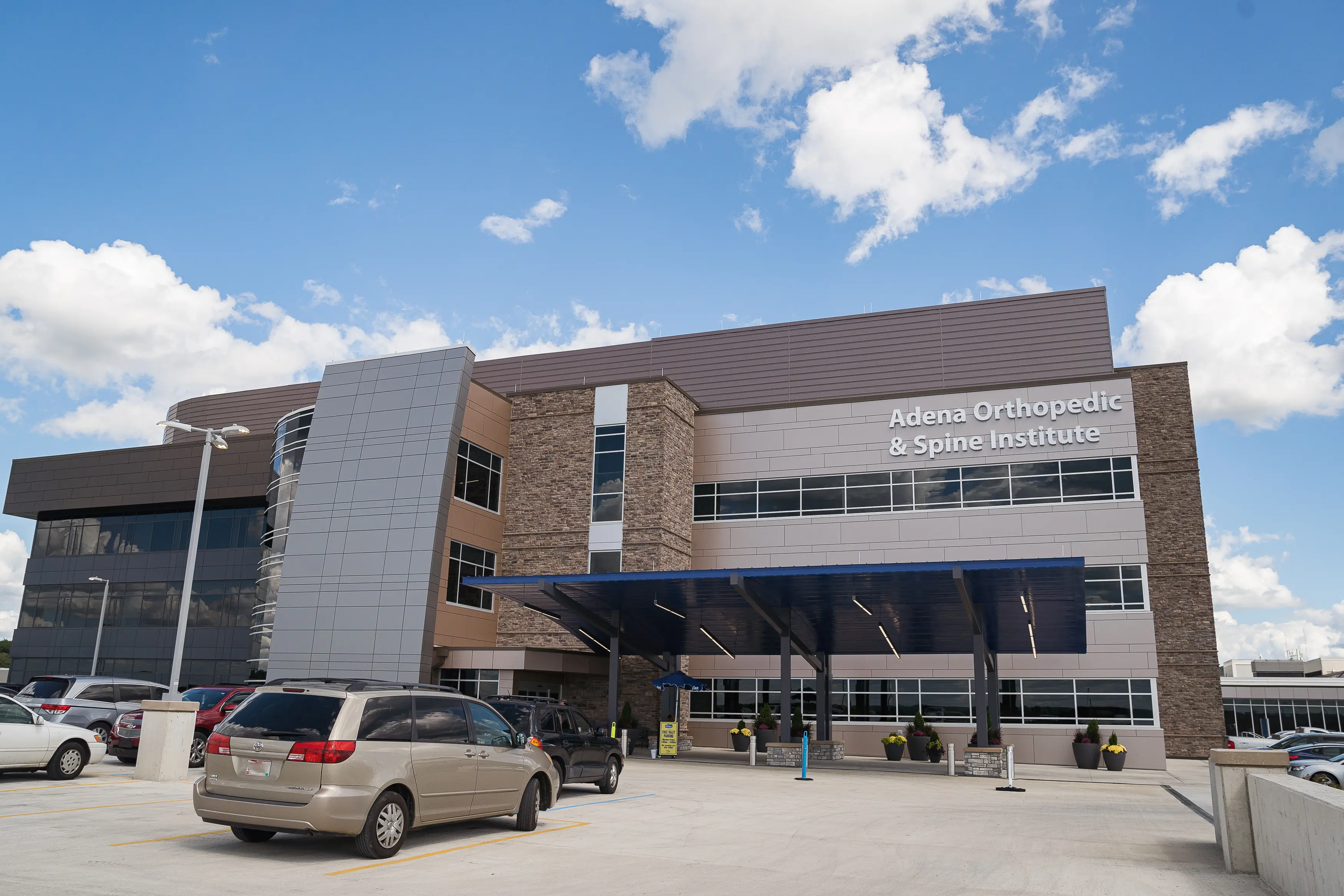
Adena Orthopedic and Spine Institute
272 Hospital Road
Chillicothe, OH 45601
Get directions